


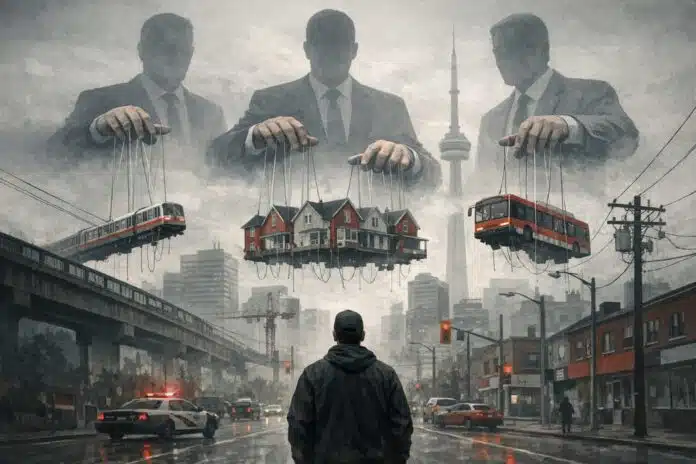
Canada Is Being Sold Out — And I’m Done Pretending Otherwise
I’ve been going back and forth on whether to say this as directly as I’m about to.
Because once you say it plainly, there’s no walking it back.
But here it is:
Canada is being sold out.
Not in some dramatic, conspiracy-theory way.
In a slow, steady, completely normalized way.
And I think a lot of people see it.
They just haven’t said it out loud yet.
This Isn’t Something I Read — It’s Something I Noticed
This didn’t come from a book.
It didn’t come from ideology.
It came from watching what’s happening around me—and realizing the pattern doesn’t make sense if you believe the system is working the way we’re told it does.
Because if it was working…
Why does everything feel harder than it should?
Why does it feel like:
-
-
- you’re running harder just to stay in place
- basic stability is slipping out of reach
- and nobody in charge seems able—or willing—to fix it
-
At some point, I stopped thinking, “this is just a rough patch.”
And started thinking:
“This looks intentional.”

What Changed for Me
There wasn’t one moment.
It was a buildup.
Housing got further out of reach.
Costs kept rising.
The same companies kept winning.
The same “solutions” kept going nowhere.
And the biggest one:
Nothing fundamental ever changed.
Different governments, same outcomes.
That’s when it clicked for me.
Maybe the problem isn’t that the system is broken.
Maybe the problem is:
it’s working the way it’s built to.
What I Mean by “Canada is Being Sold Out”
I don’t mean someone signed the country away.
I mean something more grounded than that.
I mean we’ve allowed the core parts of life to be run in a way where:
-
-
- profit comes first
- public interest comes second
- and control sits far away from the people affected by it
-
Housing.
Energy.
Banking.
Telecom.
These aren’t side issues.
These are the foundation of everyday life.
And right now, most of them are structured in ways that ordinary people don’t meaningfully control.
That’s the part that started bothering me.
The Part People Don’t Want to Admit
I think a lot of Canadians are stuck in the same place I was.
You see what’s happening…
But you don’t fully follow it to its conclusion.
Because once you do, it gets uncomfortable.
It means accepting that:
-
-
- this isn’t temporary
- this isn’t just bad luck
- and this isn’t going to fix itself
-
It means admitting that something deeper is off.
And that’s not an easy place to sit.
Why I Started Digging Deeper
Once I stopped brushing it off, I started trying to understand it.
Not in an abstract way—in a practical way.
Like:
-
-
- Who actually owns what in this country?
- Who benefits from how things are structured?
- Why do the same problems keep repeating?
-
That’s what led me to build mycdnprince, which I spoke about here.
Not as a brand.
As a place to actually map this out properly.

Where That Led Me
The more I looked into it, the harder it became to ignore one core issue:
ownership and power are concentrated.
And as long as that doesn’t change, the outcomes won’t either.
That’s what pushed me into writing about things like:
-
-
- public ownership
- economic democracy
- and yes — Revolutionary socialism
-
Not because I was looking for a label.
Because I was looking for something that actually addresses the root of the problem.
If You Want the Full Breakdown
I’ve kept this post focused on why I’m saying this.
If you want the deeper explanation—the full argument without the shortcuts—I’ve laid it out over on mycdnprince:
👉 Revolutionary Socialism in Canada: Democracy, Power, and the Fight for Control
That piece breaks down:
-
-
- what’s actually happening structurally
- why the system feels stuck
- and what it would take to change it
-
Where I’m At Now
I don’t think everything is hopeless.
But I do think pretending everything is fine is a dead end.
We’re heading into a period where:
-
-
- pressure is increasing
- stability is less guaranteed
- and the gap between how things should work and how they do work is getting harder to ignore
-
And in that kind of environment, people start asking different questions.
I know I did.
Final Thought
I’m not asking you to agree with me.
I’m saying:
If you’ve had that feeling—that something about this country isn’t adding up the way it used to—
You’re not imagining it.
The real question is what you do with that realization.
Ignore it.
Or follow it.
Because once you follow it far enough, you end up in a very different conversation than the one we’re usually having.
_______________
❖
Sources & Further Reading
Canada Mortgage and Housing Corporation
CMHC research shows that housing financialization is reducing affordability, reinforcing that rising housing costs are structural—not temporary.
Competition Bureau of Canada
The Bureau’s grocery market study highlights how corporate concentration limits competition and contributes to higher prices.
Bank of Canada
The Bank has warned that global instability and economic fragmentation are increasing long-term economic risks for Canada.
Statistics Canada
StatCan data consistently shows widening gaps between wages, housing costs, and affordability pressures.
_______________
❖