

The Lies We Bought: How Iran Was Set Up, and Who Pays the Price
We’ve been here before.
If you’ve been paying attention—really paying attention—you don’t need a think tank to explain this to you. You don’t need a retired general on cable news to tell you “the situation is complex.” It’s not complex. It’s a pattern.
A country is demonized. Sanctions are tightened. A diplomatic path is offered, walked, and then sabotaged. Then comes the bombing.
We are now in a war with Iran. And if you believe this started last week because of some sudden, unprovoked threat, I’ve got some Rocky Mountain real estate to sell you. You’ve been lied to. Again.
We’re Canadians. We’re not the ones pulling the trigger. But we’re sure as hell paying the price—and we’ve been dragged along for a ride we never signed up for.
The History of Handshakes and Stabs in the Back
How Iran Was Set Up
Let’s rewind. Not to ancient history. To this year.
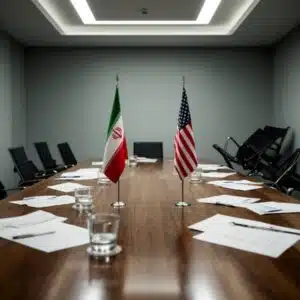
In February, there was a window. Quiet talks, mediated by Oman. The Iranians came with proposals. The Americans came with… what exactly? We’re still not sure. What we know is that promises were made behind closed doors regarding the release of frozen assets—money that belongs to Iran, by the way, not a gift from the West.
Those promises evaporated the moment Iranian diplomats stepped back onto the tarmac in Tehran. The White House called it a “lack of constructive engagement.” That’s the phrase they use when they want you to think the other side walked away.
They didn’t walk away. They were shoved.
Then came June. More talks. More intermediaries. More assurances that this time, it was serious. And what happened? Leaks to the press. “Iranian aggression.” “Regional instability.” The usual script. The talks were torpedoed so hard that the Iranian negotiators publicly questioned why they should even sit in the same room with people who treat diplomacy like a masquerade.
We watched it happen. They dangled a path to peace, waited for Iran to step onto it, and then pulled the rug out.
The Agreement That Wasn’t Allowed to Live
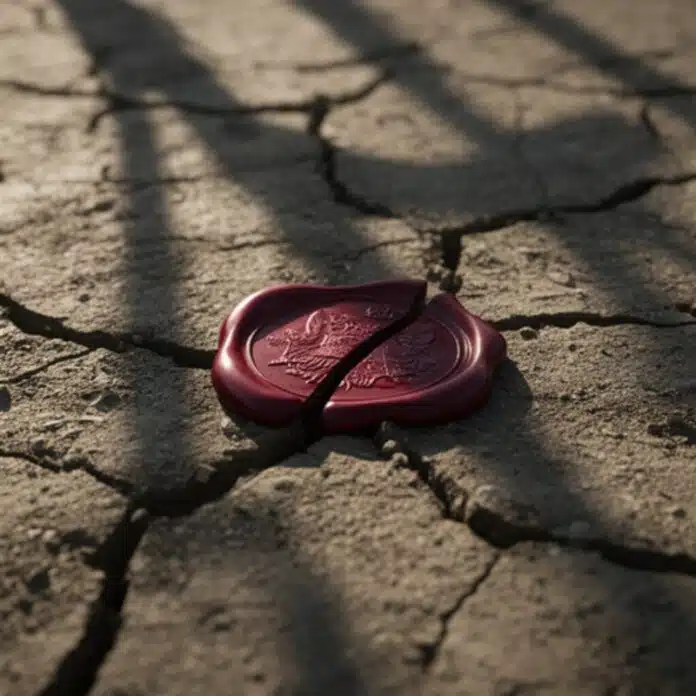
But if you want the original sin, you have to go back to 2015. The Joint Comprehensive Plan of Action (JCPOA). You remember that. For a brief moment, the world held its breath, and then—it worked.
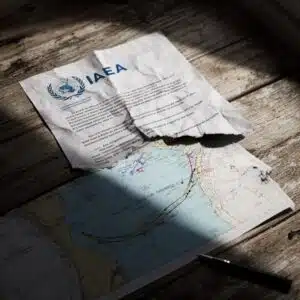
Inspectors were in. Uranium was shipped out. Sanctions were lifted. The Iranians kept their word. The International Atomic Energy Agency confirmed it, over and over. They were in compliance.
So why isn’t that deal still in place?
Because one country in the Middle East—a country that does not even sign the Nuclear Non-Proliferation Treaty itself—decided it wouldn’t stand for it.
Israel made it clear, publicly and privately, that they would not allow a diplomatic resolution with Iran to stand. Not because Iran broke the deal, but because the deal worked. A deal that worked meant Iran was legitimized. It meant economic recovery. It meant the “existential threat” narrative lost its teeth.
So they spent years chipping away at it. Lobbying. Propaganda. And eventually, the United States—the supposed guarantor of that agreement—walked away from it in 2018. Unilaterally. Without cause.
We didn’t have a seat at that table. But we got stuck with the consequences anyway.
Now, let’s talk about how this actually happened.
How Israel Tricked the US Into a War
This is the part they don’t want you to think about.
For decades, the relationship between the United States and Israel has been framed as a “special alliance.” But lately, it looks less like an alliance and more like a leash. The American political class—both parties—has become so terrified of the domestic political blowback of saying “no” to Israel that they’ve effectively outsourced their foreign policy to Tel Aviv.
The Americans didn’t decide to go to war with Iran because it was in their interest.
They did it because they were maneuvered into it.
How? Intelligence. You saw it happen in 2003 with Iraq. “Mushroom clouds.” “Yellowcake uranium.” It was all theater. This time, the script was similar: “imminent threat,” “nuclear breakout,” “they’re supplying drones.”
They fed the intelligence. They leaned on the media. They made sure that any American politician who questioned the narrative was labeled “anti-something.”
And the Biden administration—and now the current administration—walked right into it. They allowed themselves to be led into a war that serves the interests of one foreign government, not the American people.
We’re Canadians. We’re not in the room. But we’re tied to that room by history, by trade, by alliance. And when the Americans march, we’re expected to nod along.
The Ramifications: Your Wallet and Your Future
Let’s get specific about the cost. Because “geopolitics” sounds abstract until it hits your bank account.
The Strait of Hormuz is not just a line on a map. It is the throat of the global oil supply. When you threaten Iran, when you assassinate their generals, when you bomb their facilities—the strait gets nervous. Insurance rates for tankers go up. Oil prices go up. Everything you buy is transported by ship or truck powered by oil.

So when the US and Israel pushed for this escalation, they weren’t just making a “strategic” move. They were signing off on global inflation.
We are already seeing the ripple effects. Energy costs in Europe are spiking again. Supply chains that just recovered from the COVID era are snapping. And the American working class—the people who are told to wave flags and support the troops—are the ones footing the bill.
You’re paying for this war. At the pump. At the grocery store. In your rent.
And what are you getting in return? A flag-wrapped talking point and a government that pretends it had no choice.
Why Should Iran Trust the West?
This is the question the mainstream media refuses to ask.
Why in the world would Iran trust the United States?
Let’s list it out:-
-
-
-
The US overthrew their democratically elected leader in 1953.
-
The US backed Saddam Hussein during the Iran-Iraq War, even when he used chemical weapons.
-
The US negotiated a nuclear deal, certified that they were following it, and then tore it up for no reason.
-
The US assassinated a senior general, Qasem Soleimani, in a drone strike on Iraqi soil, while he was on a diplomatic mission.
-
The US promised to return to the deal, stalled for years, and then launched a war.
-
-
If a neighbor did this to you, would you trust them? Or would you arm yourself to the teeth and assume every handshake is a setup?
Iran is not irrational. They are responding rationally to a pattern of betrayal. They look at the United States and see a government that cannot be trusted to keep its word because the political class is beholden to a foreign lobby that wants them destroyed.
We’re standing next to the guy who keeps breaking his promises and wondering why nobody wants to shake his hand. At some point, you have to ask: why are we still pretending this is our fight?
Thinking Outside the MSM Script
You have to ask yourself: why are you being told to hate Iran?
Have you ever met an Iranian? Have you ever spoken to one? They are doctors. Engineers. Poets. Parents. They have a civilization that was old when my ancestors were still painting themselves blue.
The propaganda machine has done its job. They’ve convinced a generation that Iran is a monolith of fanaticism. It’s a lie. It’s the same lie they told about Iraq. It’s the same lie they told about Vietnam.
They want you scared. Because when you’re scared, you don’t ask questions. You don’t wonder why your tax dollars—and yes, Canadian tax dollars flow into this machinery too—are funding a war that benefits a foreign power. You just salute and shut up.
No Comfort, Just Clarity
I’m not going to end this with hope. Hope is what they use to sell you the next war.
I’m going to end it with a fact: We are in a war with Iran because the United States allowed itself to be used as a hammer by a country that sees peace as a threat.
The agreements were broken. The promises were lies. The “peace talks” in February and June were charades designed to give the appearance of diplomacy while the war machine was already warming up.
We’re Canadians. We didn’t start this. We can’t stop it on our own. But we don’t have to swallow the story they’re feeding us.
You can keep watching the news and believing the narrative. You can keep assuming that the people in charge have your best interests at heart.
Or you can look at the history. The pattern. The cost.
They tore up the deal. They tricked the Americans into the fight. And now we all pay the price.
That’s not a conspiracy. It’s just what happened.
_______________
❖
Sources & Further Reading
Joint Comprehensive Plan of Action (JCPOA) – Background & Collapse
Wikipedia – Joint Comprehensive Plan of Action
This provides a straightforward, well‑sourced timeline of the 2015 agreement, how it functioned, and how it unraveled. Useful for readers who want to understand the basic facts behind why trust collapsed without being spoon‑fed an official narrative.
The Iran Deal: Then and Now
Center for Arms Control and Non‑Proliferation
This breakdown explains what the deal was designed to do, what actually happened after the U.S. withdrawal, and why the collapse created long‑term instability. It reinforces the idea that tearing up agreements has consequences far beyond politics.
How Badly Has the Iran War Hit the Global Economy?
Al Jazeera – The tell‑tale signs
A clear look at how conflict in the region immediately translated into higher energy prices, supply disruptions, and inflation. This supports the point that ordinary people pay the price long before any “strategic goals” are achieved.
Echoes of Iraq: Media Framing and the War on Iran
Middle East Eye – Media analysis
This piece draws uncomfortable parallels between today’s coverage and the media failures leading up to the Iraq war. It underscores the argument that context is often buried, while simplified narratives are pushed to make escalation seem inevitable.
View previous post on this subject: Trump’s Iran Gamble Backfires: From ‘Three-Day War’ to Global Crisis
_______________
❖