


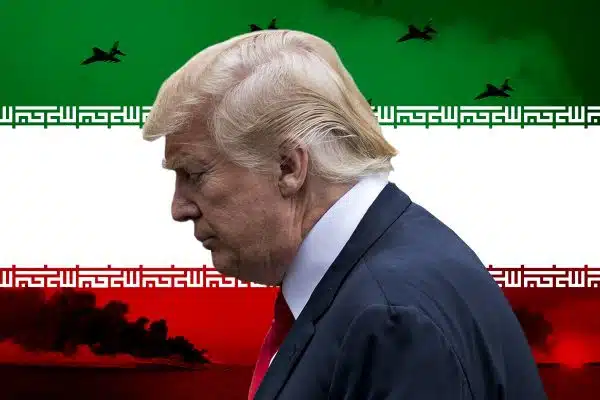
Trump’s Iran Gamble Backfires: From ‘Three-Day War’ to Global Crisis
Trump’s massive Iran aggression gamble becoming a catastrophic miscalculation
The Trump administration’s recent wave of aggression against Iran was meant to be a decisive show of force. Instead, as a detailed analysis in Communist Revolution argues, it has rapidly spiraled into a “catastrophic miscalculation” that is unraveling the president’s strategy and sending shockwaves through the global economy. Ultimately, Trump’s Iran Gamble Backfires highlights the severe consequences of this misjudgment.
According to the article by Jorge Martín and Ben Curry, published March 5, 2026, the White House appeared drunk on its perceived successes elsewhere. “Drunk with success in Venezuela, Trump thought that the same methods could be used to force Iran to submit,” the authors write. The plan, as they describe it, was a gamble: either a massive naval blockade would force capitulation, or a swift “decapitation strike” would eliminate the leadership and trigger a compliant regime change—a so-called ‘Delcy in Tehran’.
As the authors note, the implications of Trump’s Iran Gamble Backfires extend far beyond the battlefield, affecting international relations and economic stability.
That gamble, they contend, has failed spectacularly.
The Miscalculation at the Heart of the Attack
Understanding Why Trump’s Iran Gamble Backfires: A Closer Look
With every misstep, it becomes clearer that Trump’s Iran Gamble Backfires could lead to a regional conflict that nobody can control.
The article suggests the administration ignored warnings, believing its own rhetoric. Trump predicted a “three-day war,” expecting the leadership’s elimination to lead to surrender or a popular pro-US uprising. Instead, the opposite occurred.
The failure of Trump’s Iran Gamble Backfires serves as a cautionary tale for future administrations regarding the dangers of overreliance on military solutions.
The regime in Tehran, viewing the conflict as an “existential fight,” had prepared. Crucially, they had activated a “Decentralised Mosaic Defence protocol” granting local units autonomy to continue fighting, including launching ballistic missiles, even after a decapitation strike. The killing of the Supreme Leader, while a severe blow, did not break the state’s will or military capability.
Iran’s Strategy: Making the Region Pay
Unable to match US and Israeli firepower directly, the article explains, Iran has pivoted to a strategy of extracting a massive economic and political price from the US and its regional allies. As forewarned, Iran retaliated not just against Israel, but against targets across the Gulf.
The aim is twofold:
1. Inflict maximum damage on US allies like Saudi Arabia and the UAE to pressure Washington to end the war.
2. Choke the global economy by disrupting energy supplies.
The closure of the Strait of Hormuz, through which 25% of the world’s seaborne oil passes, is a centerpiece of this strategy. Strikes on the world’s largest LNG plant in Qatar and a major Saudi oil refinery are already having a tangible impact. “This is already having a big impact on oil and gas prices globally, while stocks are going down everywhere,” the article notes, with severe knock-on effects in Asia and Europe, where gas prices have soared.
A War of Attrition the US Can’t Win?
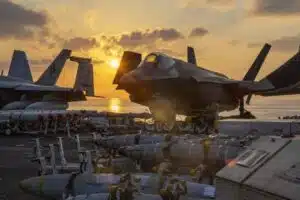
The conflict is now described as a grinding “war of attrition” between Iran’s cheap, plentiful drones and America’s expensive, limited interceptor systems. The article starkly highlights the economic disparity: “A Shahed attack drone can cost as little as $20,000, while a Patriot missile has a price tag of over $4 million.”
By swarming defences with drones and conserving missiles, Iran’s retaliation is overwhelming US air defence systems. Consequently, Gulf states are reportedly complaining of stockpile depletion, feeling abandoned. The article quotes Saudi analyst Suleiman Al-Aqili telling Al Jazeera: “America has abandoned us, and focused its defence systems on protecting Israel, leaving the Gulf states that host its military bases at the mercy of Iranian missiles and drones.”
This has left the Trump administration in apparent disarray. The authors point to the chaotic messaging from Washington—contradictory statements on the war’s duration, the use of ground troops, and negotiation stances—as a clear sign of a strategy with no “off ramp.”

Wider Implications and a Warning
This reckless strategy not only risks further escalation but also may reinforce the narrative that Trump’s Iran Gamble Backfires was a misguided attempt to distract from domestic issues.
The blog post from Communist Revolution also examines the impotence of European powers, caught between their US alliance and the economic fallout, and the dangerous courting of Kurdish groups by the US and Israel. It warns that fomenting a Kurdish insurgency could lead to the messy disintegration of Iran, a scenario that might suit Israel but would create a “Libyan-type nightmare.”
Ultimately, the article frames this as a reckless gamble born from domestic political pressure—an attempt to shore up falling approval ratings. Instead, it has unleashed an unpopular war with no end in sight, which now threatens the global economy and, by extension, Trump’s own presidency. The core message is a stark one: never have freedom or democracy been ushered in on the back of US military aggression.
The world watches closely as Trump’s Iran Gamble Backfires continues to unfold, hoping for diplomatic solutions to emerge amidst the chaos.
In conclusion, the implications of Trump’s Iran Gamble Backfires are profound, as they threaten to reshape the geopolitical landscape for decades to come.
❖