

When Democracy Fails: Canada’s System Isn’t Broken—It’s Working as Designed
A long-form analysis inspired by The Crisis of Canadian Democracy — and rooted in class struggle
Pillar Page: When Democracy Fails
Read this overview first, then continue to the series | ≈ 6 min read
The Lie Canadians Tell Themselves (So They Can Sleep at Night)
Canadians are fed a simple bedtime story:
We’re stable. We’re reasonable. We have one of the best democracies in the world. Not perfect—but solid.
That story is everywhere. In schools. In media. In the way we flinch when Americans talk about their chaos.
And it works brilliantly—
as long as you never look too closely.
Because looking closely means admitting you’ve been played.
And that’s a harder truth than most people are ready to swallow.
Before We Begin: Where This Fits With My Other Work
This series (When Democracy Fails) is the political companion to two earlier series published on mycdnprince.ca:
-
-
-
Enough Is Enough – A five-part series documenting who owns Canada, how the housing crisis was manufactured, why public ownership matters, and what a democratic mass movement looks like.
👉 Start with Enough Is Enough Pillar Page here -
The Power to Change It – A five-part series exposing the broken ladder of opportunity, the myths we’re sold, the role of corporate media, the first steps toward real change, and building a democratic mass movement.
👉 Start with The Power to Change It here
-
-
This new series answers a different question:
If the economy is owned by the few (Enough Is Enough) and the myths protect them (The Power to Change It) — then how does the political system keep it all locked in place?
That’s what When Democracy Fails dissects, building on my two earlier posts here and here.
The System Doesn’t Work the Way You Think It Does. It Never Did.
When Andrew Coyne dissects Canada’s political system, he doesn’t describe something temporarily off track.
He describes something that no longer functions as advertised.
-
-
- Parliament doesn’t meaningfully check power.
- MPs don’t act independently.
- Accountability mechanisms don’t consistently hold.
-
What remains is a system that still performs democracy—
but has quietly stopped delivering it.
The machinery still moves. The gears still turn.
But the engine is disconnected from the wheels.
Canada’s Democracy Still Has the Shape of Democracy but None of the Substance.
Elections happen. Debates are held. Votes are cast.
From the outside, everything looks intact.
A perfect museum piece.
But inside?
The core functions—representation, accountability, constraint on power—have been weakened to the point of symbolism.
And once those go, the rest becomes appearance.
You don’t have to tear down the building to make it uninhabitable.
You just have to remove everything that made it a home.
So Where Did the Power Go? (Spoiler: Not to You)
It didn’t disappear.
It moved.
And it moved in one direction:
Toward the centre.
Away from Parliament. Away from MPs. Away from public scrutiny.
Away from you.
This concentration of political power mirrors the concentration of economic wealth I documented in Who Owns Canada? – the same small group, the same structural design, the same exclusion of ordinary people.
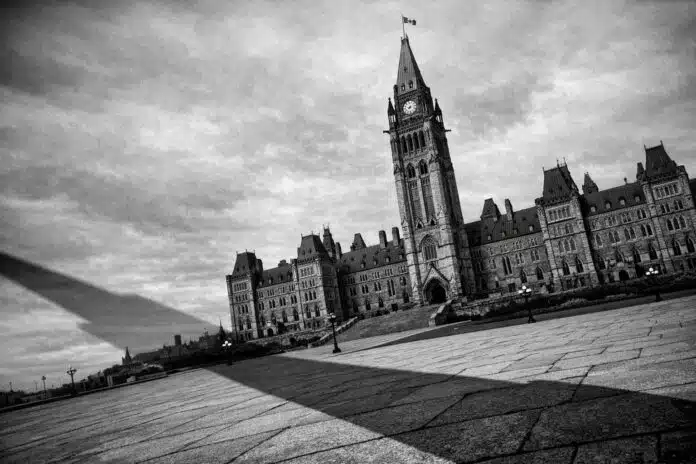
The Rise of the Prime Ministerial Monarchy
In theory, Canada is governed through Parliament.
In practice, power has concentrated inside the executive—specifically around the Prime Minister and their unelected inner circle.
The Prime Minister’s Office isn’t a support team.
It’s a command bunker.
It shapes decisions before they reach Cabinet.
It coordinates messaging to manufacture consent.
It manages political strategy to protect the brand.
And it ensures that nothing significant escapes its reach.
Cabinet doesn’t govern.
Cabinet confirms.
Ministers are told what to decide before they sit down.
Dissent is culled before it surfaces.
And most importantly—
It ensures that major decisions don’t escape its reach.
That’s not democracy. That’s a board meeting with a flag.
Parliament Still Exists—But It Doesn’t Drive Outcomes
Members of Parliament still sit in the House. They debate. They vote. They represent—at least on paper.
But their ability to influence outcomes is near zero.
Why?
Strict party discipline.
One of the strictest in the democratic world.
-
-
- Votes are predetermined.
- Dissent is punished.
- Independence ends careers.
-
So while Parliament remains visible, its role has fundamentally shifted:
From decision-making to ratification.
From a legislature to a theatre.
You’re watching a show.
The script was written last week.
The actors are just reading their lines.
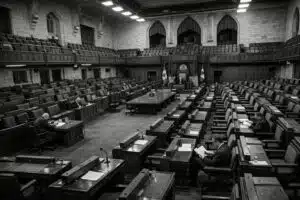
Debate Happens. But It Rarely Changes Anything.
You can watch Parliament live.
You’ll see arguments, speeches, theatrical outrage.
But ask a simple question:
How often does debate change the outcome?
Not delay it. Not reframe it for the evening news.
Change it.
Almost never.
Because decisions are made before debate begins.
The debate isn’t for deliberation.
It’s for presentation.
What you’re watching isn’t democracy in action.
It’s product launch—with talking points.
Representation Without Power Isn’t Representation. It’s Hostage-Taking.
We’re told MPs represent their constituents.
But representation requires more than a photo op and a form letter.
It requires power:
-
-
- The ability to influence legislation
- The ability to challenge party leadership
- The ability to vote freely without fear of punishment
-
Without that, representation becomes symbolic.
And symbolic representation doesn’t hold governments accountable.
A prop is still a prop, even if you give it a seat in Parliament.
This is why the myth of opportunity I wrote about matters so much. We’re told we have a voice. But a voice without power is just noise.
Accountability Has Become Unreliable—By Design
There’s a widespread assumption that Canada’s system enforces accountability.
That if something goes wrong, someone answers for it.
Watch what actually happens:
-
-
- Scandal surfaces.
- Questions are asked.
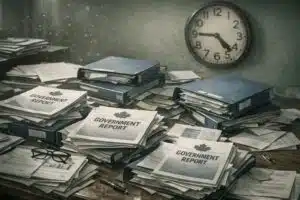
- Reports are written.
- Nothing changes.
- The system moves on.
-
Because accountability mechanisms operate within the same structure that limits them.
The police investigate the police.
The ethics commissioner reports to the PM.
The committee that could punish is filled with loyalists.
That’s not accountability. That’s an escape hatch with a rubber stamp.
This Pattern Isn’t Temporary. It’s Structural.
Different governments. Different leaders. Different scandals.
Same outcomes.
That’s the signal most people ignore.
When problems repeat across political cycles—across parties, across decades—they aren’t accidents.
They aren’t “rough patches.”
They aren’t the fault of one bad leader.
They’re structural.
And structures don’t change just because you vote harder.
As I argued in The Broken Ladder, the system isn’t failing. It’s working exactly as designed—to concentrate opportunity, wealth, and power at the top.
So Why Doesn’t Anything Change? (The Question They Don’t Want You to Ask)
This is where most discussions stop.
Because the answer isn’t comfortable.
Reform keeps failing—and that’s not a coincidence.
Every few years, reform is promised:
More transparency. Stronger oversight. An empowered Parliament.
And then?
Proposals get narrowed. Changes get diluted. Nothing fundamental shifts.
Why?
Because the system filters out threats to its core structure like an immune system attacking a virus.
Proposals that don’t threaten the centre?
→ They move forward slowly, creating the appearance of responsiveness.
Proposals that do threaten the centre?
→ They stall. They disappear into committees. They emerge as press releases thanking everyone for their input—and then vanish.
Not dramatically.
Quietly.
Because dramatic resistance would wake people up.
The Incentives Point in One Direction: Obedience
The people with the most power inside the system…
Benefit from how it works.
They rose within it. They operate through it. Their careers depend on it.
Why would they dismantle the structure that put them there?
Why would they weaken the tools they rely on?
Why would they open space that could reduce their control?
They won’t.
Not voluntarily. Not through “good faith.” Not because you wrote a strongly worded letter.
Incentives matter more than intentions.
And every incentive in Canadian politics rewards loyalty, obedience, and silence.
This is precisely why corporate media plays such a crucial role—manufacturing consent, narrowing debate, and making structural critique seem “extreme.”
Stability Is Not Democracy—It’s Often the Opposite
Canada is stable. Compared to other countries, that’s true.
But stability can come from two very different places:
-
-
- Balance — power distributed, checks functioning, accountability real.
- Control — outcomes managed, dissent contained, the public pacified.
-
A system can appear stable because it works well.
Or because it works tightly.
Canada has the second.
And we’ve been fooled into calling it the first.
We’ve Been Measuring Ourselves Against the Wrong Benchmark
“We’re not as chaotic as the Americans.”
“We’re not as divided as the British.”
“We’re not as broken as the Hungarians.”
That’s not a standard. That’s a cope.
The real question isn’t “Are we better than the worst?”
The real question is:
Does our system deliver meaningful representation and accountability to ordinary people?
If the answer is no—and it is—then stability alone doesn’t mean much.
A well-managed prison is still a prison.
This Is Where the Argument Shifts
Up to this point, the focus has been diagnosis.
But once you follow the logic all the way through, you hit a wall.
A wall that polite Canadian discourse is designed to hide.
If the system:
-
-
- Concentrates power at the centre
- Limits real representation
- Resists meaningful reform
- Rewards obedience over accountability
-
Then the issue isn’t performance. It’s design.
And systems don’t redesign themselves.
Not when the people who benefit from the current system are the ones in charge of changing it.
Systems Don’t Redesign Themselves. They Have to Be Replaced.
That’s the part people avoid.
Because it raises the question no election, no petition, no hashtag can answer:
What replaces a system that no longer works—and was never meant to serve you?
Not “How do we improve it?”
Not “Which leader do we try next?”
What comes after?
Structural Change Isn’t a Slogan. It’s a Direction.
“Structural change” is often dismissed as unrealistic.
Too big. Too disruptive. Too vague.
But strip away the fear, and it means something simple and urgent:
Changing how power is organized.
Who can act.
Who can decide.
Who can be held accountable.
Who owns what.
Right now, those pathways are narrowed to a funnel.
Power flows upward. Decisions flow downward.
And the rest of us are told to applaud.
Structural change widens those pathways.
It pushes power outward and downward—
into institutions that can’t be captured by a handful of party loyalists and corporate donors.
As I laid out in Public Ownership in Canada, there are alternatives. They’re not theoretical. They’ve worked elsewhere. And they start with the simple idea that essential goods and services should be controlled by the people who need them, not the people who profit from them.
What Would That Actually Look Like? (Concrete, Not Abstract)
| Current System | Structural Alternative |
|---|---|
| PMO controls everything | Power distributed across elected, recallable bodies |
| MPs vote as extensions of leaders | Free votes, proportional representation, citizen initiatives |
| Corporate ownership of housing, energy, telecom | Public ownership, worker co-ops, democratic control of essentials |
| Lobbying as legalized bribery | Binding public financing, lobbyist registry with real jail time |
| Accountability as performance | Independent ethics enforcement, citizen-led recall |
| Parliament as theatre | Legislatures with real power to initiate, amend, and block |
This is not a complete blueprint.
But it’s a direction.
And the direction is clear: Power must move from the few to the many.
That’s not radical.
That’s the original promise of democracy—before capitalism bought it and hollowed it out.
Because This Isn’t Just About Politics. It’s About Class.
You cannot fix the PMO while Bay Street still owns the country.
You cannot free Parliament while MPs owe their careers to donors and corporate boards.
You cannot have political democracy when the economy is a dictatorship of capital.
Political power follows economic power.
Always has. Always will.
The concentration of power in the PMO is matched by the concentration of wealth in the hands of the few.
The strict party discipline in Parliament is matched by the strict wage discipline on the shop floor.
The theatre of accountability in politics is matched by the theatre of “shareholder value” in the economy.
The same class wrote both scripts.
This is why Enough Is Enough isn’t just a slogan. It’s a recognition that the democratic mass movement—not elections, not petitions, not reform—is the only force that has ever broken systems like this.
Revolutionary Socialism Is Not a Dirty Word. It’s the Only Honest Answer.
Let’s stop dancing around it.
The system you’ve just had dissected—
centralized, unaccountable, reform-resistant, class-driven—
is not a malfunctioning democracy.
It is capitalism’s political form.
And capitalism cannot be reformed into serving the many.
It can only be replaced.
-
-
- By democratizing ownership
- By decentralizing power
- By making decisions at the level where people are affected
- By treating housing as a right, not an asset
- By running energy, water, and telecom for need, not profit
- By building a Parliament that actually fears the people—not the party whip
-
That’s Revolutionary socialism.
Not gulags. Not five-year plans.
Economic democracy.
Power in the hands of the people who do the work, pay the rent, and raise the children.
This Isn’t Cynicism. It’s Clarity.
Believing the system works when it doesn’t—
hoping for reform from people who benefit from the status quo—
voting harder for the same two parties that produced the same outcomes—
That’s not optimism. That’s denial.
And denial has a cost.
We’re paying it in unaffordable rents, stagnant wages, hollowed-out public services, and a political system that performs democracy while strangling it.
And This Is Where Things Actually Begin
Not with a plan.
Not with a petition.
Not with a hashtag.
With recognition.
That the system isn’t temporarily failing.
It is consistently producing the outcomes it was built to produce:
concentrated wealth, concentrated power, and a population too exhausted to fight back.
Once you see that—
the conversation changes.
Because you stop asking for better outcomes from the same structure.
And you start asking a different question entirely:
How do we build the alternative—starting now, starting where we stand?
The first step isn’t a protest or a manifesto. It’s a conversation with the person next to you. Then organizing. Then acting. Then building.
Where This Connects
This pillar page ties together the full 5-part series (When Democracy Fails) and anchors it in the two earlier series:
| Series | Focus | Link |
|---|---|---|
| Enough Is Enough (5 parts) | Economic ownership, housing, public alternatives, mass movement | Start here |
| The Power to Change It (5 parts) | Myths, media, broken promises, first steps, building a democratic mass movement | Start here |
| When Democracy Fails (5 parts) | Political centralization, parliamentary theatre, reform failure, structural replacement | This series (johnprince.ca) |
Read them together, and the picture is complete:
The economy is owned by the few (Enough Is Enough).
The myths protect that ownership (The Power to Change It).
And the political system locks it all in place (When Democracy Fails).
Final Word (Because You Deserve One)
The system is not broken.
It is working as designed—to concentrate power, protect wealth, and exhaust dissent.
You cannot reform that.
You cannot negotiate with that.
You cannot vote that away.
You replace it.
Not tomorrow. Not after the revolution.
Starting now.
In your workplace. In your building. In your neighbourhood.
In every space where people come together because the system has abandoned them.
That’s how systems die:
Not with a bang, but with people quietly refusing to participate anymore.
The question isn’t whether that moment is coming.
The question is whether you’ll be ready when it arrives.
_______________
Next in the series: [Part 1 — The System Isn’t Sick. It’s a Crime Scene. »]
Series navigation: Pillar Page (you are here) | Part 1 (next) | Part 2 (coming) | Part 3 (coming) | Part 4 (coming) | Part 5 (coming)
📌 Sources & Further Reading
Andrew Coyne on the Crisis of Canadian Democracy – Fair Vote Canada
Coyne’s damning assessment: “Put simply, we do not live in the system we think we do. We have the form of a democracy but not the substance.” This 2025 article directly quotes his work while documenting how new laws give Cabinet Ministers power to override federal legislation.
👉 https://www.fairvote.ca/08/12/2025/budget-implementation-act-minister-power/
How Power Concentrates in the PMO – CCPA/Policy Alternatives
Academic analysis of how Canada’s Westminster system has an “inherent tendency toward the concentration of power (into the Prime Minister’s Office).” Political scientist Peter Russell calls our elections “false majority governments.”
👉 https://www.policyalternatives.ca/news-research/how-proportional-representation-could-help-to-decentralize-power-and-strengthen-parliament/
An Insider Confession: The Rise of PMO Power – The Tyee
A former Liberal deputy minister and PMO insider explains how “the Prime Minister’s Office has exponentially grown in influence” under both Tory and Liberal governments. Written as the author’s farewell before his death.
👉 https://thetyee.ca/Opinion/2019/03/08/Tex-Enemark-Goodbye-PMO-Power/
Canada’s Toxic Parliament – The Tyee
A scathing review of how the rot set in nearly 50 years ago. Calls MPs “trained seals, nodding like bobbleheads behind their leaders.” Argues that without major popular pressure, reform isn’t practical.
👉 https://thetyee.ca/Culture/2017/06/21/Toxic-Parliament/
_______________
❖